
Using 3D Scanning to Improve Fitment for Custom Car Parts
- M Aerospace RTC
- Jun 12
- 2 min read

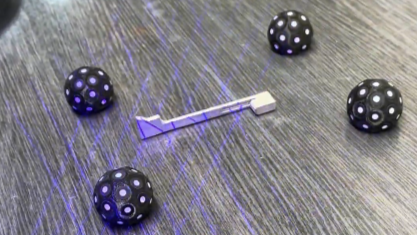
When building, restoring, or modifying a vehicle, fitment can make or break the final result. Even a small difference in shape, angle, spacing, or mounting location can cause a custom part to sit incorrectly, interfere with surrounding components, or fail to function as intended. This is where 3D scanning for automotive parts becomes a valuable tool. By capturing accurate dimensions from an existing vehicle or component, 3D scanning makes it easier to design custom car parts that fit properly the first time.
Traditional measurement methods work well for simple parts, but automotive components often feature complex curves, tight spaces, irregular surfaces, and hard-to-reach mounting points. A tape measure or caliper may not capture every detail needed for an accurate design. With automotive 3D scanning, the shape of a part, an opening, a bracket location, a panel, or an engine bay area can be digitally recorded and turned into a precise reference model.
Once the scan is complete, the digital data can be used in CAD to create a new part with the vehicle's real dimensions. This is especially helpful for custom automotive parts such as brackets, mounts, ducts, trim pieces, housings, bezels, and replacement components. Instead of guessing measurements or relying on repeated test-fitting, designers can build around the exact geometry of the vehicle or the original part.
This process is also useful for reverse engineering car parts. If an original component is damaged, discontinued, or difficult to source, 3D scanning can help capture the remaining shape and structure. From there, the part can be digitally repaired, adjusted, and prepared for production through 3D printing or other custom manufacturing processes.
Better fitment also means fewer wasted prototypes. In many custom builds, parts must be tested, adjusted, and remade several times before they are ready for final use. Starting with accurate scan data makes rapid prototyping of automotive parts more efficient. A prototype can be designed with greater confidence, printed, tested, and refined with less trial and error.
For performance builds, restoration projects, and aftermarket modifications, 3D scanning helps bridge the gap between the vehicle and the final part. Whether the goal is to recreate a missing trim piece, design a custom intake duct, build a stronger mounting bracket, or develop a one-off interior component, accurate scan data yields better results.
As demand for 3D-printed car parts and custom automotive solutions grows, 3D scanning is becoming an important part of the design process. It helps turn real-world dimensions into usable digital models, making it easier to create parts that fit, function, and support the needs of each unique vehicle.


Comments