
When to Use CNC Machining vs. 3D Printing for Custom Parts

When a business needs custom parts, choosing the right manufacturing process can make a major difference in cost, performance, lead time, and final quality. Two of the most common options are CNC machining and additive manufacturing. Both can produce high-quality components, but each process is better suited for different project needs depending on material, tolerance, quantity, and part complexity.
3D printing, also known as additive manufacturing, is often a strong choice for prototype development and complex designs. Because the part is built layer by layer, industrial 3D printing can create shapes that may be difficult or expensive to produce with traditional machining. This makes it useful for custom parts with internal features, lightweight structures, unusual geometries, or designs that are still being tested. Businesses can quickly move from a CAD design to a physical prototype, review the part, make changes, and print another version without the need for expensive tooling.
3D printing also makes sense for low-volume manufacturing, fit testing, concept models, jigs and fixtures, and production support parts. If a company needs only a small number of components, additive manufacturing may offer a faster, more flexible solution than setting up a larger manufacturing process. Material selection is important, however. Plastic 3D printing, resin printing, and metal additive manufacturing each offer different levels of strength, finish, heat resistance, and durability.
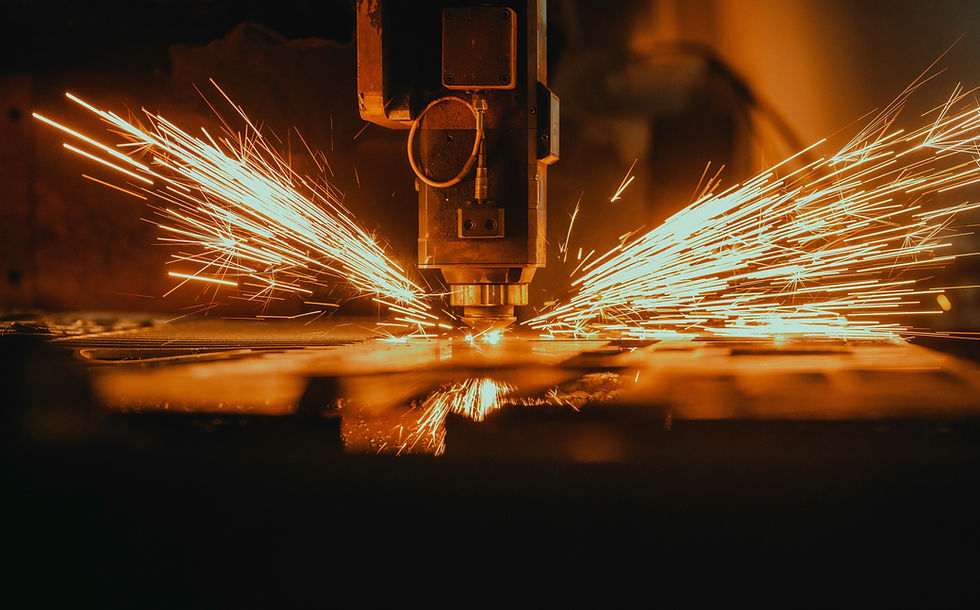
CNC machining is often the better choice when a part requires tight tolerances, strong material properties, smooth surface finishes, or ultra-high precision. CNC machining removes material from a solid block of metal or plastic, making it ideal for functional components that need long-term durability. It is commonly used for production-ready parts, high-strength metal components, tooling, aerospace parts, automotive components, and industrial manufacturing applications where consistency matters.
Quantity can also help determine the right process. For one-off parts, early prototypes, or small batches, 3D printing may be more efficient. For larger quantities or parts that require exact repeatability, CNC machining may provide better long-term value. Part complexity also matters. A simple metal bracket may be a good fit for CNC machining, while a lightweight part with complex internal channels may be better suited for 3D printing.
In many projects, businesses use both processes together. A part may begin with 3D printing or metal additive manufacturing for prototype development and fit testing, then move into CNC machining for the final version. With the right CAD design, engineering support, and custom manufacturing strategy, companies can choose the process that best fits their part, timeline, and production goals.


Comments