
How Much Does a 3D Printing Service Cost? Everything You Need to Know
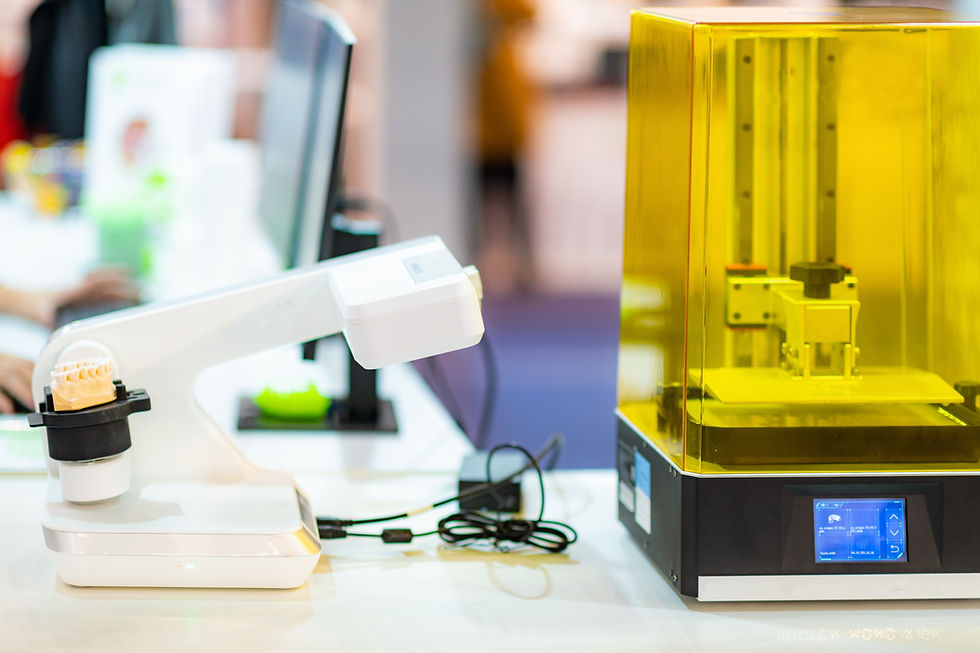
In a world where customization, speed, and innovation are essential, 3D printing has become a strategic tool for industries that can’t afford mistakes or delays—such as aerospace, medical, automotive, and advanced manufacturing. But one question keeps coming up: how much does it cost to 3D print something?
The short answer: it depends.
The full answer involves understanding all the factors that influence the final cost of a 3D printed part. At M Aerospace RTC, we break down exactly what you're paying for when you use a service like this.
1. Material matters… a lot
One of the main factors that affects cost is the type of material used. Printing with PLA or PETG—common and low-cost materials—is not the same as working with industrial-grade polymers or metals like titanium, which require specialized equipment and technical expertise.
Each material has different mechanical properties, and in demanding industries like aerospace, choosing the right one is essential to ensure strength, lightness, and precision.
2. Size and design complexity
In 3D printing, bigger doesn’t always mean more expensive, but it does mean more material and longer print times. Designs with complex geometries, internal cavities, or multiple assembled components may require supports, more processing time, or even post-processing, all of which can directly impact the final cost.
3. Functional prototype or final part?
The intended use of the part also affects pricing. A visual prototype printed in low resolution will be more affordable, while a functional or field-ready part will demand greater precision, quality control, and additional processes like heat treatments or special finishes.
4. Post-processing and finishing
Once a part comes out of the printer, additional work is often needed: sanding, polishing, painting, assembly, or heat treatment. These steps add cost, but they also significantly enhance the final result. In sectors like aerospace, post-processing isn’t optional—it’s part of compliance and performance standards.
5. Quantity: one-off or small batch?
Unlike traditional manufacturing, 3D printing has lower fixed costs, making it ideal for on-demand production or small batches. If you need several identical parts, the unit price can decrease significantly.
So… how much does 3D printing cost?
Prices can range from just a few dollars for a simple part to hundreds—or even thousands—when it comes to industrial applications involving technical materials, high volumes, or complex processes.
At M Aerospace RTC, we don’t just print parts—we optimize solutions. We evaluate your project from an engineering, materials, and functionality perspective to offer a tailored service with the quality and precision your industry demands.
Need a quote?
Reach out and tell us what you need to print. Our technical team will evaluate your project to offer the best solution in materials, technology, delivery time, and cost—with the guarantee only a company specialized in industrial applications can provide.
Contact us today and discover how to take your project to the next level with 3D printing.


Comments